

The Shiley Eye Institute and Viterbi Family Department of Ophthalmology is an international leader in eye and vision research. Residents have numerous opportunities to work with world-renowned faculty mentors.
The department consistently ranks among the top 5 departments in the country in terms of NIH funding per faculty. There are extensive research programs in multiple disciplines, including computational ophthalmology, biomedical informatics, data science, stem cell biology, gene editing, multi-omics analyses, bioengineering, and device development.
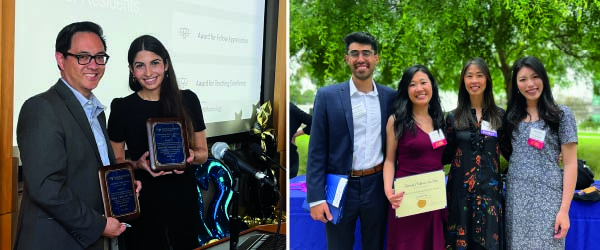
Residents have a dedicated 6-week research elective during the PGY3 year, but the overall research experience is longitudinal in nature. Residents identify mentors and potential projects during their PGY1 and PGY2 years and begin logistical work such as obtaining IRB protocols and other approvals. Residents can perform research throughout residency, including during the research elective in PGY3 as well as during their clinical elective time in PGY4 year, which offers flexibility for research activities.
Residents in the program typically have multiple presentations at national and international conferences as well as contributions to multiple peer-reviewed publications by the time they graduate. The program is very supportive of resident research activities and will make reasonable accommodations for conference attendance and provide funding support for these activities as well (see Resident Benefits page).

Excellence in research among UCSD residents has been recognized by selection to the Heed Fellows program, research awards, and attainment of faculty positions at leading academic institutions (see more details on the Alumni Highlights page).
In addition to the standard curriculum, there are also opportunities to engage in specialized research training opportunities, such as the GOAL Program (which is focused on preventive medicine and public health) or the AI-READI research internship program (focused on AI and data science). Resident participation in these structured training programs are evaluated on a case-by-case basis.
The UCSD Department of Ophthalmology and the UCSD Division of Preventive Medicine in the Department of Family Medicine have partnered together to form the Global Ophthalmology and Advanced Leadership Program (GOAL). The objective of the program is to train individuals to contribute as future leaders in global and preventive ophthalmology.
After completing PGY1, participants will enroll in a four-year program (PGY2 through PGY5), combining ophthalmology residency, preventive medicine residency, and course work for a Master’s Degree in Public Health (MPH). Upon completion of the program, graduates will be eligible for dual boards in Ophthalmology and Preventive Medicine and receive an MPH from San Diego State University (SDSU).
During the PGY2 through PGY4 years of Ophthalmology, the program has an integrated curriculum including approximately 7 courses in the public health curriculum (which could start in PGY1 as well). An additional PGY5 year is sponsored by Preventive Medicine and is focused on research and public health competencies, with clinical rotations to include community-based ophthalmology, clinical preventive medicine, global health initiatives, and underserved communities.
Additional focus is also placed on advanced leadership skills and training. GOAL graduates will be dually-board eligible physicians who have the knowledge and leadership skills to design and implement population based and public health-focused research and interventions, as well as broader ophthalmologic research that are applicable on a global scale. During the PGY5 year the program affords the opportunity to maintain clinical skills in ophthalmology as an attending physician & surgeon.
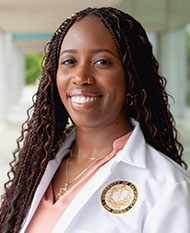
"I am excited to participate in the Global Ophthalmology and Advanced Leadership Program as its inaugural resident. Through this program I aim to gain the necessary skills that will make me both a competent ophthalmologist and public health advocate so that I can provide essential eye care to underserved communities both locally and abroad."
Skenda Jean-Charles
All GOAL residents will become skilled in the following areas: medical and surgical ophthalmology; population medicine, including public health; research; and clinical preventive medicine. In addition to these required components, the program recognizes the breadth of career opportunities in ophthalmology and preventive medicine and the specific skills and competencies required for an individualized career path. Therefore, we encourage residents to concentrate their practicum rotation efforts in tracks that emphasize the specific goals and objectives of training toward their specific career path.
Ophthalmology was the first specialty board, being founded in 1917. Satisfactory completion of the ophthalmology portion (PGY2-PGY4) of the GOAL program enables participants to sit for the ABO Certification exam. Preventive Medicine is also one of the 24 specialties of the American Board of Medical Specialties, comprised of General Preventive Medicine, Occupational Medicine and Aerospace Medicine.
The General Preventive Medicine Residency (PMR) is accredited by the ACGME, and an additional PGY5 year for those who have completed ophthalmology residency and at least half of the credits needed towards a MPH will qualify the participant to also sit for the Preventive Medicine Boards. Founded in 1983, the San Diego State University-University of California San Diego PMR is co-sponsored by the School of Public Health at UC San Diego and the Graduate School of Public Health at San Diego State University. GOAL residents will complete an MPH during their training, concurrent with the development of competencies in clinical PM, population medicine, and research.