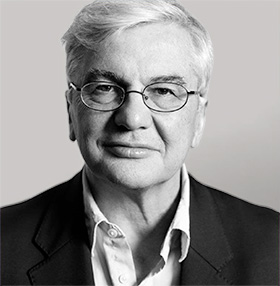
With a deep sense of curiosity and a quest to answer questions that had yet to be asked, Napoleone Ferrara, MD, Distinguished Professor of Pathology and adjunct professor of ophthalmology and pharmacology, has made discoveries which have improved the lives of millions of patients worldwide.
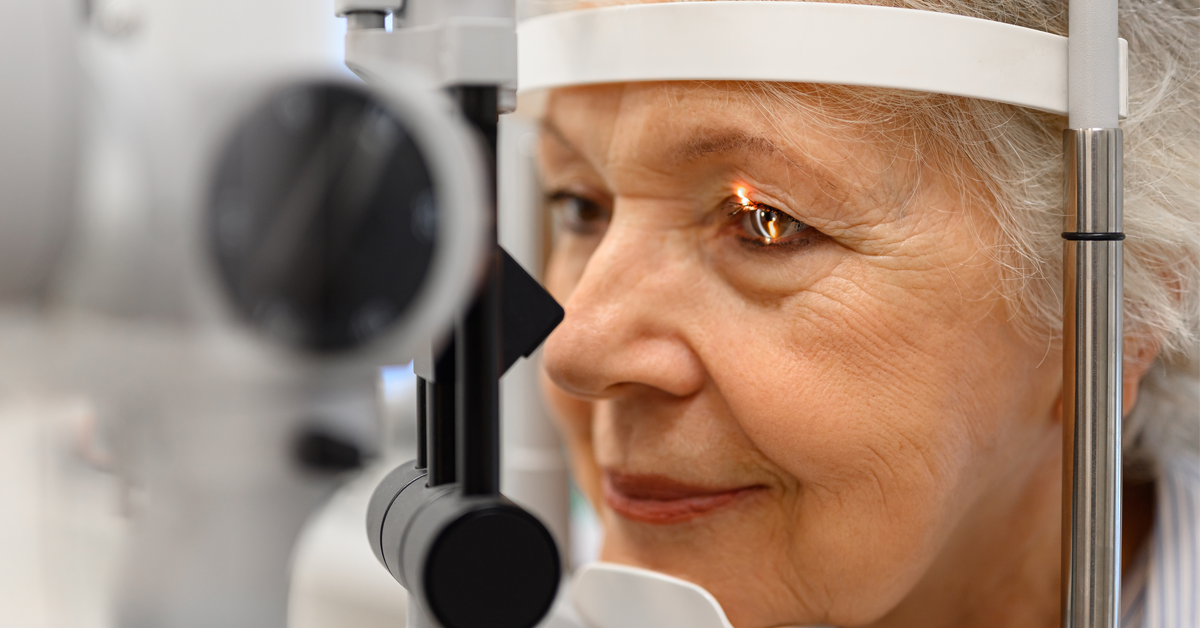
Named to the Forbes 250: America’s Greatest Innovators list earlier this year, Ferrara is celebrated for discovering Vascular Endothelial Growth Factor (VEGF), now recognized as the master regulator that drives new blood vessel formation (angiogenesis). Dysregulated VEGF signaling can drive a spectrum of diseases, from cancer and diabetic retinopathy to ischemic heart disease. Capitalizing on this insight, Ferrara developed a neutralizing anti‑VEGF antibody that blocks new‑vessel growth, halting disease progression in both oncology and ophthalmology. Today, VEGF‑targeted agents are standard treatments for many cancers and are the first‑line therapy for age‑related macular degeneration, the leading cause of adult blindness. His foundational research continues to fuel breakthroughs across modern medicine.
“Although I have worked on multiple projects during my scientific career, it is true that my major focus has been investigating VEGF,” said Ferrara, who is the Hildyard Endowed Chair in Eye Disease at the Shiley Eye Institute. “At the beginning this seemed a narrow field, but we learned that the VEGF pathway covers a surprisingly broad biological, pathological and therapeutic territory. Angiogenesis is an essential process required not only for normal development but is also implicated in tumor growth and in blinding eye disorders including diabetic retinopathy and age-related macular degeneration (AMD).”
He added that over the years, there has been a considerable interest in targeting angiogenesis and numerous angiogenic factors were identified as potential therapeutic targets. However, given this apparent redundancy, it was widely believed that blocking only one factor or one pathway would have little or no effect. Unexpectedly, targeting VEGF or its receptors resulted in substantial benefits in patients with cancer and especially with ocular neovascular diseases such as AMD. In such disorders, anti-VEGF therapy has been the standard of care for the last 20 years and has resulted in unprecedented visual preservation for millions of patients.
Ferrara’s pathway into medicine was perhaps inspired by his grandfather, who was a science teacher. His extensive collection of books on natural sciences sparked a passion for seeking answers that lives on today.
“After completing a post‑doctoral fellowship at UCSF, I began an OB/GYN residency,” Ferrara recalled. “Caring for patients was rewarding, but the ‘mysterious factor’ I’d uncovered at UCSF—VEGF—was always on my mind. A year later I returned to UCSF for a second post‑doc, where I learned essential protein‑purification techniques to pursue my favorite project, VEGF. I know now that was the right choice for me.”
Ferrara completed medical school at the University of Catania Medical School in Catania, Italy, where he was born and raised. Over a career spanning more than four decades, Ferrara has authored hundreds of peer-reviewed scientific publications and amassed more than 200,000 citations, reflecting the far-reaching influence of his discoveries on biomedical research and patient care worldwide.
He has earned some of the highest honors in biomedical research. In 2010, he received the prestigious Lasker–DeBakey Clinical Medical Research Award—often referred to as "America's Nobel"—for discoveries that led to transformative treatments for cancer and age-related macular degeneration. He later received the inaugural Breakthrough Prize in Life Sciences, one of the world's largest scientific awards, and the Canada Gairdner International Award, widely regarded as a predictor of future Nobel laureates. He is also a member of the National Academy of Sciences and the National Academy of Medicine, two societies among the highest distinctions for American scientists.
While the tools of science have evolved dramatically over the course of his career, Ferrara believes the essence of discovery remains unchanged: curiosity, observation and the freedom to think beyond conventional boundaries.
“Clearly in recent years, there has been greater emphasis on new technologies including the use of organoids, AI, etc. However, I believe that these approaches cannot yet fully capture the complexity of biology,” said Ferrara.
Even after decades of groundbreaking discoveries, he continues to find inspiration in unexpected places. “My best research ideas were conceived during weekend motorcycle rides in the Bay area and then in the San Diego area,” he added.
Story by: Joyce Pritchett - jmpritchett@ucsd.edu
Media contact: Stephanie Healey - s2healey@ucsd.edu
Photo credit: Bridgitte Lacombe