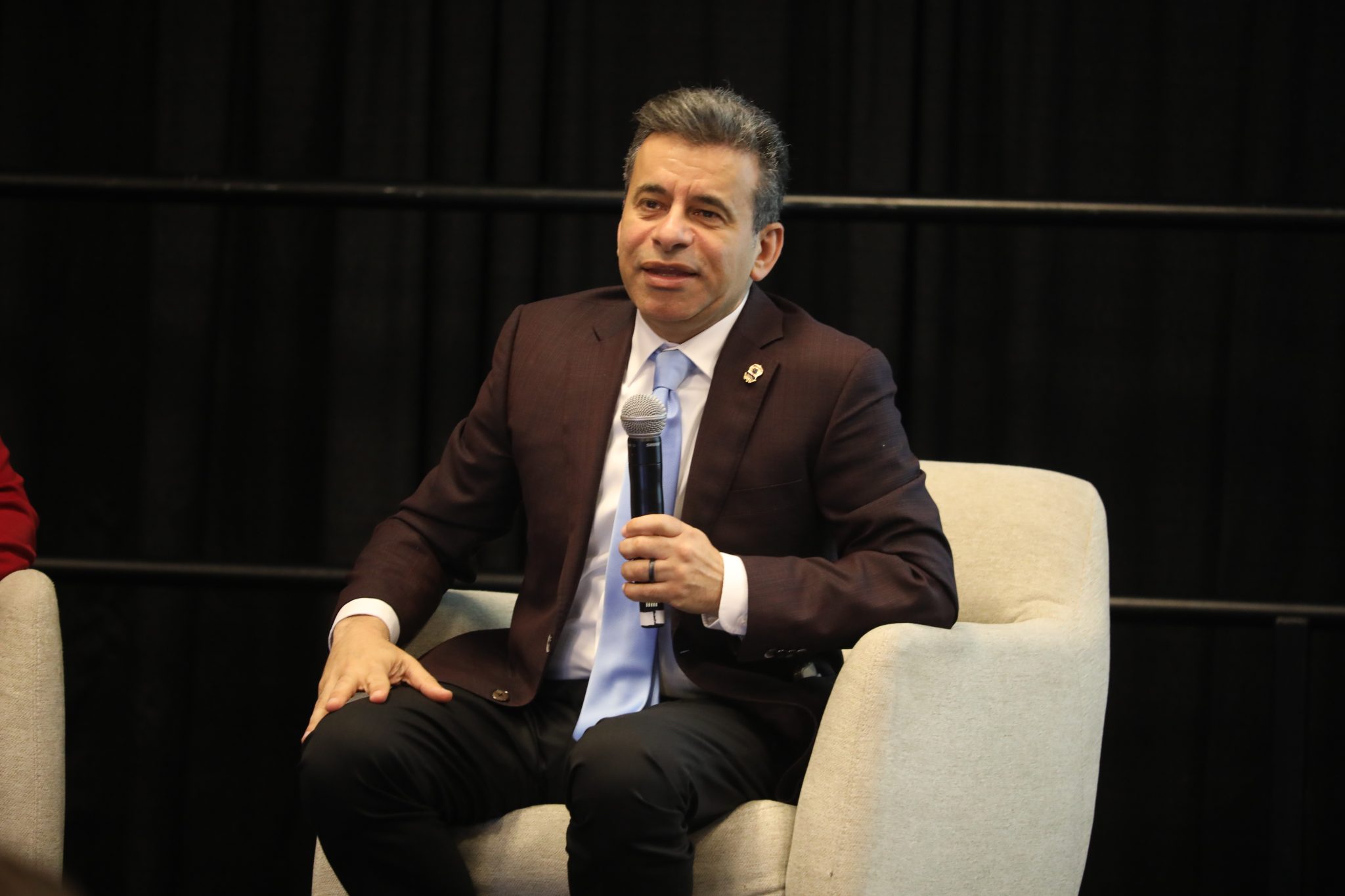
William R. Freeman, MD is a Vice Chair and Distinguished Professor in the Viterbi Family Department of Ophthalmology, as well as Co-Director of the Retina Division and Director of the Joan and Irwin Jacobs Retina Center.
Freeman’s clinical and research interests include complicated retinal detachment, diabetic retinopathy, macular holes and age-related macular degeneration. He has published over 600 peer reviewed scientific papers.
He earned his graduate degree at Mount Sinai School of Medicine in New York City before completing his Residency at Lenox Hill Hospital in Manhattan and Fellowships at the UC San Francisco and the University of Southern California.
I was always interested in bettering mankind through science. I found that mathematics and physics and chemistry were too rigid for me and was attracted to biology and medicine.
I care for patients, do complicated surgery and work with wonderful colleagues in a cutting-edge environment. I am also heavily involved in research including laboratory work and clinical trials. I help translate basic scientific and engineering advances into clinical care. I am also at an outstanding research and teaching institution with dedicated colleagues.
Without a doubt Joan Jacobs and her family. She had a retina problem that I treated and then her family and mine became close. She was an amazing woman! I recall when first seeing her, she was worried if I had a good lunch that day - as at Shiley we tend to be busy. She put my needs ahead of hers which is a wonderful lesson in life. This is truly the sign of a highly advanced soul.
After completing two post-residency fellowships—first in uveitis at UC San Francisco and then in retinal disease with Dr. Steven Ryan—I joined UC San Diego as an Assistant Professor of Ophthalmology, marking my first and 26 only faculty position. I chose UC San Diego for its strong emphasis on clinical and basic science research. Initially, we operated in a small temporary building on the La Jolla campus, as there was no dedicated eye center at the time. I appreciate the collaborative environment at UC San Diego, which allows me to work with leading experts and stay at the forefront of the field.
Collaborations are essential for advancing patient care and research. Working with top specialists, like Dr. Michael Sailor at UC San Diego in Chemistry and Dr. Truong Nguyen in the Jacobs School of Engineering, I am involved in NIH-funded projects aimed at improving drug delivery to retinal cells and using AI to interpret retinal images. Major progress in my field requires teamwork, as no one can achieve significant advancements alone. Additionally, grateful patients contribute to our research funding, supplementing federal support. The dedicated staff at the Joan and Irwin Jacobs Retina Center and the Shiley Eye Institute play crucial roles in our progress as well.
Improved medications and surgical treatments for all retinal diseases are being developed; in the next 3-5 years we will have genetic therapies for certain retinal diseases that were considered untreatable in the past.
Medical research is advancing rapidly! The opportunities to develop new and more effective treatments are linked to partnerships between academic researchers who are also clinicians, and the biotechnology industry. I am confident that progress will continue to be made rapidly. Biotechnology is integral to medical progress, but it is important to integrate this in an ethical manner and not only focus on profit.
Without a doubt my most productive and satisfying teaching experience is with residents and fellows. During clinic and operating room time, we discuss unusual cases or surprising outcomes plus we also review complex cases at our weekly Tuesday retina Zoom international conference which includes SEI retina alumni. This is highly satisfying.
My family has always come first. I have taught all my children how to ski, surf, and windsurf - as those are my passions. My wife, Dr. Laura Gomez also participates in these activities. We always have dinner at home together and even though my youngest are in college or recent college graduates, when they are at home, we always eat dinner together and discuss the trials and tribulations as well as the exciting things in life.